
MORRISBURG — A sweeping overhaul of conservation authorities in eastern Ontario is shifting decision-making power upward — raising concerns that municipalities like South Dundas could have less say over the land and waterways they know best.
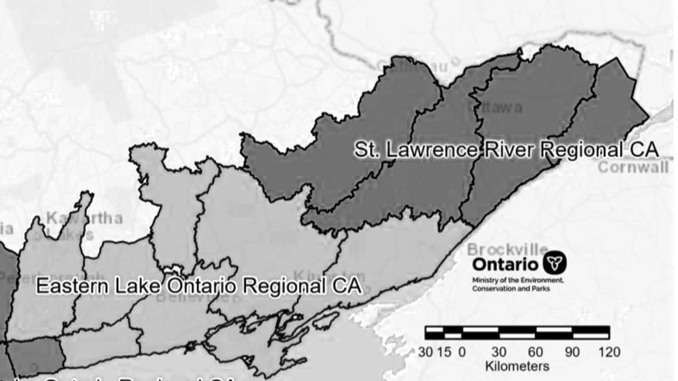
The merger will shrink Ontario’s 36 conservation authorities to nine regional organizations. Locally, the Mississippi Valley, Rideau Valley, South Nation, and Raisin Region CAs will be rolled into the new St. Lawrence River Regional Conservation Authority by mid-2027.
Under the new structure, upper and single tier municipal governments will both fund annual levies and appoint the board to oversee the SLRRCA, ending 80 years of lower-tier municipal responsibility. That change has South Dundas Mayor Jason Broad concerned for the loss of local voices.
“The new SLRRCA has the potential to bring efficiencies and stronger regional coordination. For South Dundas and other municipalities in the region, it is essential that local voices remain strong within the governance structure and that services related to flood management, environmental protection, and watershed management continue to meet the needs of our residents and farmers,” Broad told The Leader.
The draft changes, yet to be tabled at Queen’s Park, has been billed by Minister of Environment, Conservation, and Parks Todd McCarthy as a way of improving customer service at the local level, and to harmonize development rules in municipalities where two or more CAs operate.
Broad said there were some efficiencies locally where two CAs operate now in one municipality, but under the new model there will likely be only one person representing six times the population in SDG. He also believed that the new regional CAs will have some “priority and attention at the Eastern Ontario Wardens Caucus.”
The consolidation of CAs comes a year after the province put a hold on controversial wetland mapping changes that local municipalities and agriculture groups were protesting. Broad said one of the concerns under the new regional model once it goes into effect is that municipalities like South Dundas have input into decisions.
“It will be important that local perspectives are heard and considered when policies or mapping updates are being reviewed,” Broad said. “There will need to be much collaboration at the county level, so all our individual needs are communicated correctly, as they have communicated, they want to ‘protect local expertise and front-line programs that communities rely on.’”
He added that upper-tier governments like SDG Counties will have to discuss how to handle this as a group.
The new SLRRCA covers more than 15,000 square kilometres and will operate 35 conservation areas, plus managed forests. In a region so large, Broad said the two SNC properties in South Dundas, Two Creeks Forest and Robert Graham conservation areas, will be watched closely to make sure they do not receive less attention or support than other areas..
“South Dundas values the conservation areas and natural lands currently managed by SNC, and they are important to both our residents and visitors,” he said. “This is why we continue to ask for provincial delegations with Rural Affairs to tell our story and get all our government property owners moving in the same direction.”
Broad added that goes for the federal government for dealing with land issues in areas of South Dundas such as the Iroquois Lock area.
“As the merger moves forward, we want to ensure that the issues raised during the process are addressed and that our local conservation areas continue to be maintained, supported, and recognized as important community assets,” said Broad.
Reaction to the merger has been minimal from conservation authorities. South Nation Conservation held its annual general meeting March 12 and elected what will be its final board before the merger takes place. Augusta Township Deputy Mayor Adrian Wynands was elected SNC board chair.
In a press release issued March 16, SNC said its offices, staff, and programs across the region will be uninterrupted.
“As we move into this new regional model, our focus remains on preserving the high level of service our communities expect,” said
SNC Chief Administration Officer Carl Bickerdike. “We will continue to work constructively with the Province, our peers at MVCA, RRCA and RVCA, Conservation Ontario and our municipal partners.”
Discover more from Morrisburg Leader
Subscribe to get the latest posts sent to your email.