
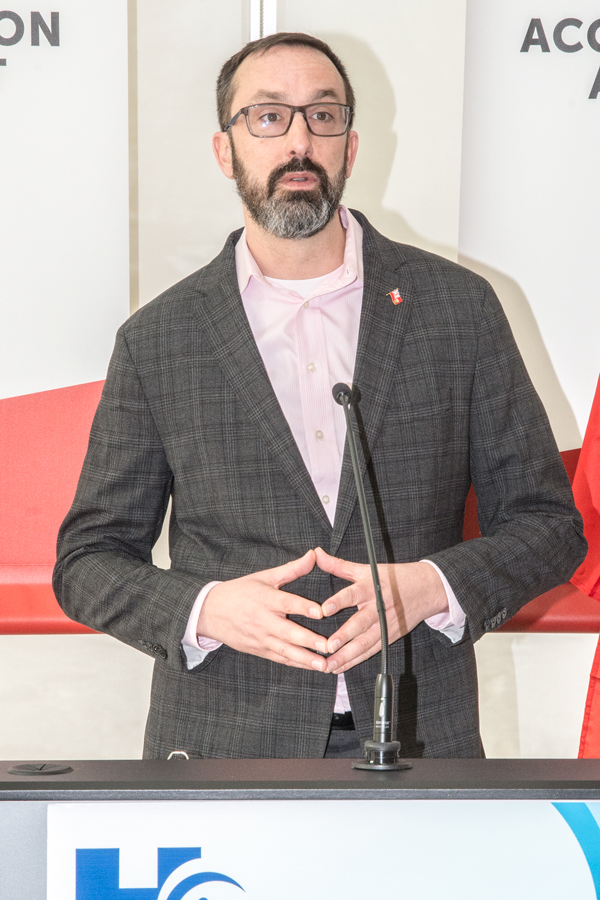
CORNWALL – The provincial minister overseeing Ontario’s colleges and universities defended cuts to the student grant portion of the Ontario Student Assistance Program.
Minister of Colleges, Universities, Research Excellence and Security, Nolan Quinn — responding to questions during a press conference at the Cornwall Community Hospital February 19 — said the program was unsustainable as-is.
“We had a pressure of $2.3 billion this fall if we didn’t act and change the way OSAP was granted,” Quinn said, responding to The Leader. “We are now more aligned with the rest of the jurisdictions across Canada.”
He continued that the province had the most generous program and also the highest number of students in postsecondary.
“We want to ensure it’s not only sustainable for today’s students, but the generation of students behind them as well.”
The minister called the $6.4 billion in spending increase over four years a “historic investment,” saying that the $5 billion per year spent on postsecondary will increase to $7 billion this fall.
An October 2025 review of the 2025 provincial budget by Ontario’s Financial Accountability Office found that the province projected that funding at MCURES would decrease by 3.3 per cent beginning in the 2026-27 school year. The FAO also found that beginning in 2027-28, the province would have to “implement efficiencies” or commit to new funding just to maintain current levels.
Quinn also responded to remarks made by Ontario Premier Doug Ford on Tuesday about the feedback he has received from students on those OSAP changes.
“I mentioned to the students, you have to invest in your future, into in-demand jobs,” Ford said February 17. “You’re picking basket-weaving courses, and there’s not too many baskets being sold out there.”
Quinn said he couldn’t speak for the premier.
“But he was implying that the investment into yourself will translate into increased career earnings, so ensuring that the course you’re going into has a labour market need.”
OSAP changes announced last week include decreasing the maximum grant portion of the program from 85 per cent of a student’s assistance to 25 per cent — a 70.6 per cent decrease.
Discover more from Morrisburg Leader
Subscribe to get the latest posts sent to your email.